What you get
A page you can send to anyone.
Two things: a message the moment something breaks, and a status page you can send to anyone. Both are below — ours, not a mock-up.
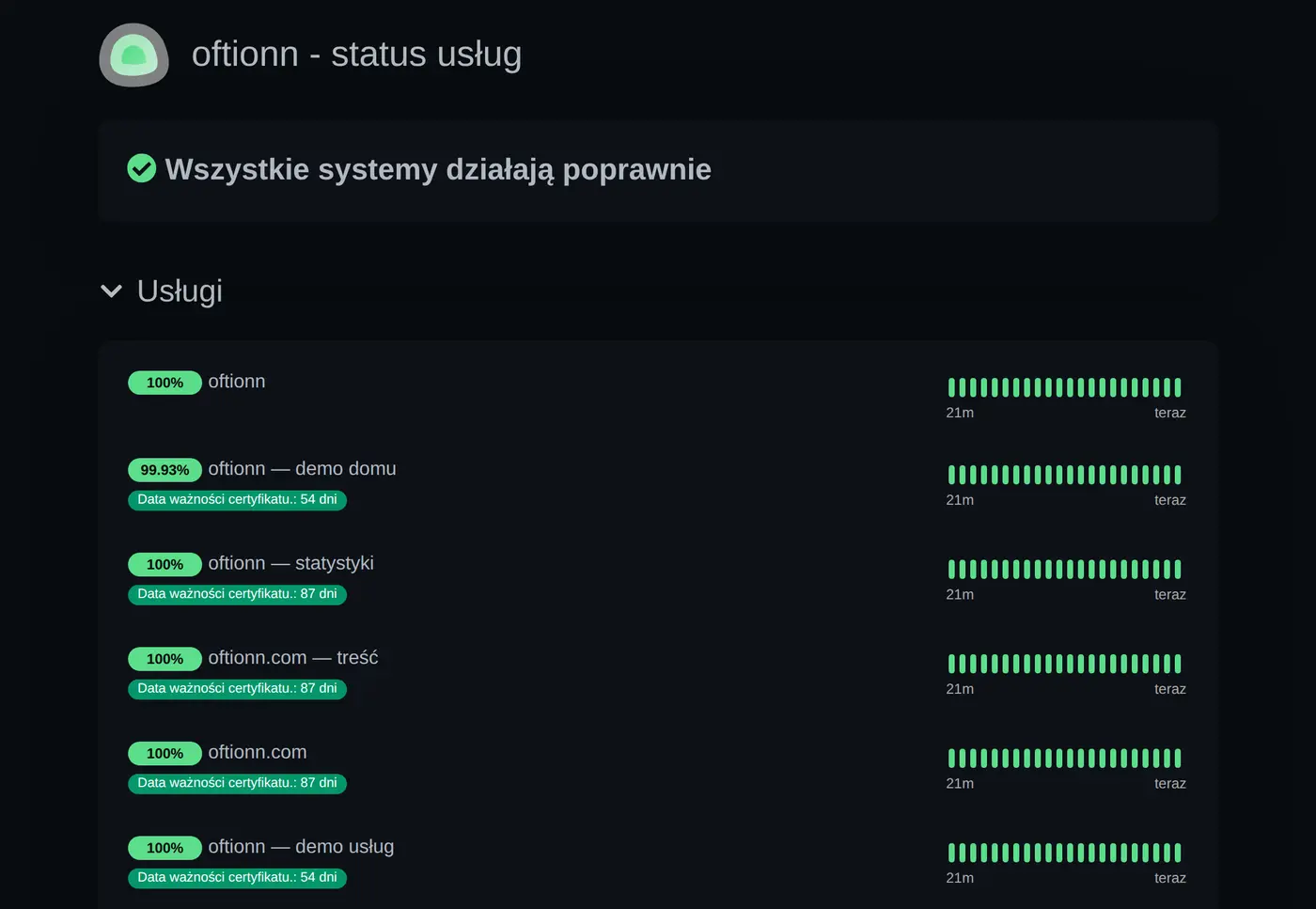
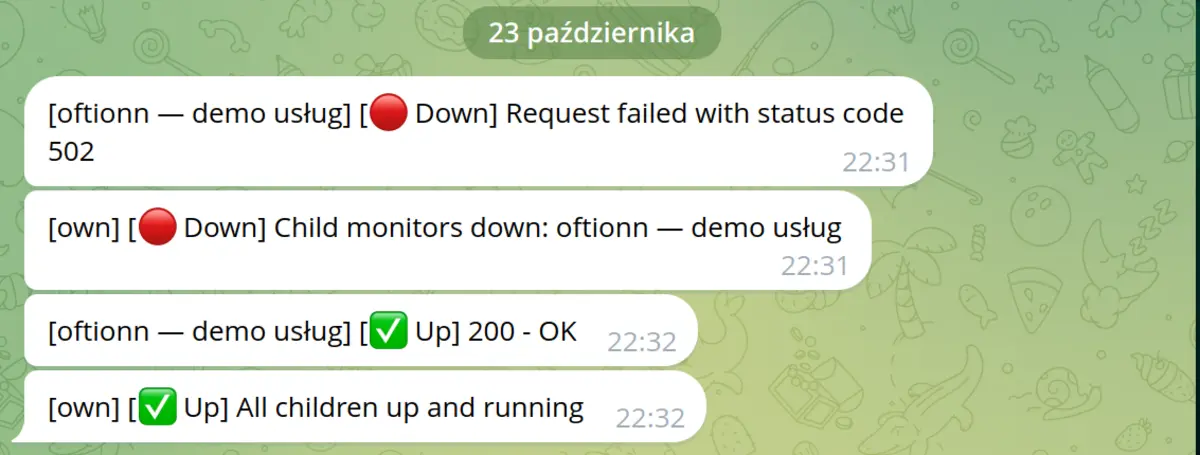
We check your site every minute from outside your network. When it stops answering, slows down, or the certificate is about to expire, you get a message on your phone — not an email you read on Monday.
No contract. Cancel in a month. We set it up — you only give us the address.
None of these are exotic failures. All three happen to small company websites several times a year, and all three are noticed by somebody else first.
Hosting restarts, a certificate renewal fails, a plugin update breaks the page. Nobody looks at the site at 2 a.m., so it is down until morning — and the first person to notice is somebody who wanted to buy something.
The browser stops showing the page and shows a red warning instead. Technically the site works. In practice everyone turns back, and the ones who do not turn back write to ask whether you have been hacked.
The worst of the three, because everything goes at once: the site, the company email, the logins people use it for. It happens once a year, to an address nobody has checked since it was registered.
From a server outside your hosting, so a failure of your hosting cannot hide itself.
Two things: a message the moment something breaks, and a status page you can send to anyone. Both are below — ours, not a mock-up.
At 7:18 in the morning oftionn.com stopped answering — the request timed out. Nobody was looking: it was before work, on a site that had been running for weeks. The message arrived on a phone, and by 7:19 the site was back. We still do not know what it was, and that is the point — you cannot react to something you never learn about.
One price, everything included. No setup fee, no contract, no price per check or per alert.
Prices net, monthly. Say the word and we stop at the end of the month.
Your hosting tells you when your hosting knows. It cannot tell you that its own machine stopped answering, that DNS points somewhere else, or that the page loads but shows nothing. We check from outside, which is the only place those failures are visible.
A single failed check does not alert. Three in a row do. A lost packet or a one-second hiccup stays quiet, a real outage does not.
Telegram, email, SMS gateway or a webhook into whatever you already use. Telegram is what we use ourselves: it arrives in seconds and costs nothing.
No. We only need the address. Monitoring looks at your site the same way a visitor does — nothing is installed anywhere, and we hold no passwords of yours.
You get the alert, and so do we. If you want us to look into it, we will — that is separate work, quoted before we start. Monitoring alone tells you; it does not repair.
We configure the checks, connect the alerts to wherever you want them, and send you a link to see it working. We reply within 24h.
[email protected] · Białystok, Poland